
Rangeley Lakes Heritage Trust (RLHT) recently announced the appointment of two new members to its Board of Directors: Rachel Hovel and Kyle Haley. Both bring strong ties to the region and diverse professional expertise that will strengthen RLHT’s leadership in conservation, restoration, and stewardship.
“We’re excited to welcome Rachel and Kyle to the board,” said David Miller, executive director of RLHT. “Their knowledge, experience, and shared love of the Rangeley Lakes Region will be tremendous assets as we continue executing our strategic conservation priorities, watershed protection plan, and fostering meaningful connections with the community.”

Rachel Hovel
Rachel Hovel
Rachel Hovel is an aquatic ecologist and Associate Professor of Biology at the University of Maine at Farmington. After living in the Great Lakes and Pacific coast regions, she now calls Maine home and resides on the watershed boundary between the Sandy and Carrabassett Rivers. She studies fish and invertebrates across a range of freshwater habitats. Her focus is on how changes to freshwater environments—especially those caused by climate change—influence aquatic organisms and ecosystems. Her expertise will bode well with RLHT’s plans to institute a comprehensive watershed protection plan for the Rangeley Lakes Region.
For work and fun, she thinks about how landscape diversity shapes biological communities while hiking, skiing, biking, kayaking, and canoeing throughout the northern Appalachian Mountains and waterways and enjoying the area’s natural beauty.
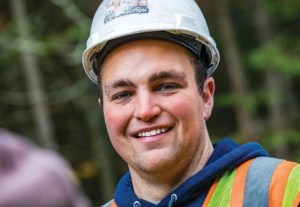
Kyle Haley
Kyle Haley
Born and raised in Rangeley, Kyle Haley’s family has been rooted in the area for generations—dating back before the town was officially incorporated. A graduate of Rangeley Lakes Regional School, he went on to earn his MBA from Husson University in 2018. He and his family operate M&H Logging & Construction, a local business known for its wide-ranging work on residential, commercial, and municipal projects across the region. M&H has been an influential partner in RLHT’s river restoration projects, including the removal of undersized culverts and replacement with open-bottom bridges throughout the Kennebago watershed.
His deep familiarity with the local landscape and industries gives him a valuable perspective on land use and sustainable development. In his free time, he enjoys backcountry snowmobiling across Maine and the Rockies, and capturing the beauty of western Maine through photography.
Comments are not available on this story. Read more about why we allow commenting on some stories and not on others.
We believe it's important to offer commenting on certain stories as a benefit to our readers. At its best, our comments sections can be a productive platform for readers to engage with our journalism, offer thoughts on coverage and issues, and drive conversation in a respectful, solutions-based way. It's a form of open discourse that can be useful to our community, public officials, journalists and others.
We do not enable comments on everything — exceptions include most crime stories, and coverage involving personal tragedy or sensitive issues that invite personal attacks instead of thoughtful discussion.
You can read more here about our commenting policy and terms of use. More information is also found on our FAQs.
Show less