
CARRABASSETT VALLEY — Seth Wescott is a central figure in snowboarding’s past, remains one of its brightest stars in the present and has linked himself directly to its future.
Sounds like an exhausting life, but Wescott’s recent itinerary was rife with the same thumb-twiddling and shoulder-shrugging that besieged the rest of us who enjoy each of Maine’s four seasons.
Wescott admittedly whiled away a few late-autumn days with his eyes raised heavenward, wondering aloud why it was warmer at midnight in early December than it was at noon many days in late June.
“It’s been kind of frustrating,” said Wescott. “We wanted to get out there earlier than this.”
Sugarloaf’s late opening date was more of an impediment to its most famous resident than to its prospective visitors.
The past world champion and reigning Olympic snowboard cross gold medalist was constrained by the elements, limited mostly to dry-land training before leaving this week for two weeks of intense hill time in Telluride, Colo.
That’s the site of the second World Cup snowboard cross race of the season Dec. 18-19. Waiting at the base of the mountain is what would seem a foregone conclusion: Wescott’s official invitation to defend his Olympic title in Vancouver two months later.
“We’re inside the last hundred days, which is kind of unbelievable. I’d like to get Olympic qualifying taken care of (at Telluride),” Wescott said. “Then while everyone else is stressing out in January, I’ll be getting a good month of training.”
At 33, Wescott is the elder statesman of a United States ‘A’ team that also features Graham Watanabe, Nate Holland, Nick Baumgartner and Jonathan Cheever. Not one of the stablemates has been able to step forward and supplant Wescott’s status as star of the show.
Last year’s overall World Cup runner-up backed it up with a silver medal in the first 2010 Cup event at Chapulco, Argentina, in September. Wescott was second to Pierre Vaultier of France. Watanabe was third.
Nobody else in the red, white and blue approached the podium. Still, Wescott has stopped shy of presuming his spot in the Olympic parade.
“The sport just continues to progress. To stay there, you’ve got to keep progressing with it,” Wescott said. “The whole field has gotten faster. The U.S. team has a lot more depth than it did four years ago. The third and fourth-place guys on the team were considered non-contenders, to the point where now we have five guys who can compete in World Cup events. The United States team is definitely the hardest group to compete against internationally. It’s good. You can’t just be cruising.”
Snowboard cross was a first-time Olympic event when Wescott won the 2006 gold in Turin.
Featuring small groups of racers in an all-out sprint down the mountain while negotiating steep drops and sharp turns, the sport seems tailor made to attract the younger generation and a vast TV audience.
Couple that with the added attention of Wescott’s breakthrough victory, and the result is a field of hopeful racers that has grown exponentially.
Even as he pushes to outrun his own peers, Wescott already has a stake in the next generation. He has taken an active role in mentoring fellow Franklin County native and Carrabassett Valley Academy product Alex Tuttle.
Tuttle, 19, of Stratton, exploded onto the national scene by winning a junior division national championship in March 2008. He backed that up last spring with a fourth-place finish in the FIS junior world championship at Nagano, Japan, qualifying him to make his World Cup debut at Telluride.
“It’s been unbelievable. Not a lot of people can say they have someone with that kind of experience and those credentials helping them out,” Tuttle said of Wescott. “He’s shown me a lot of stuff in terms of training. And he started out in the same programs I did here at Sugarloaf and CVA.”
The physical similarities between Wescott and Tuttle also are striking. Each is 6-foot-1, just shy of 200 pounds.
Tuttle intends to run the second-tier NorAm circuit with an eye on qualifying for more World Cup appearances over the next three seasons. But in an ever-evolving sport, one sterling result could change the timetable in a hurry.
“I don’t think he’s that far away,” Wescott said. “I looked at the heat sheets from the Junior Worlds, and he’s right there. Hey, best-case scenario, he goes to Telluride and earns a spot in the World Cup this year. The first World Cup race I went to, the top 10 guys in the world were there, and I went right through to the podium. That stuff is possible. I’d love to share more of those long rides to the Portland Jetport with Alex.”
When the weather cooperates, both men say there’s no more productive place to call home than their shared outpost off Route 27.
“I can’t say enough about (Sugarloaf) really,” said Wescott. “I moved out West for a couple of years. No matter where I go in the world, this place is unmatched.”
If Wescott and his protégé have their way, Sugarloaf’s take of Olympic and World snowboard cross hardware might be equally unrivaled on the world stage — long after the pioneer hangs up his racing skis.
koakes@sunjournal.com
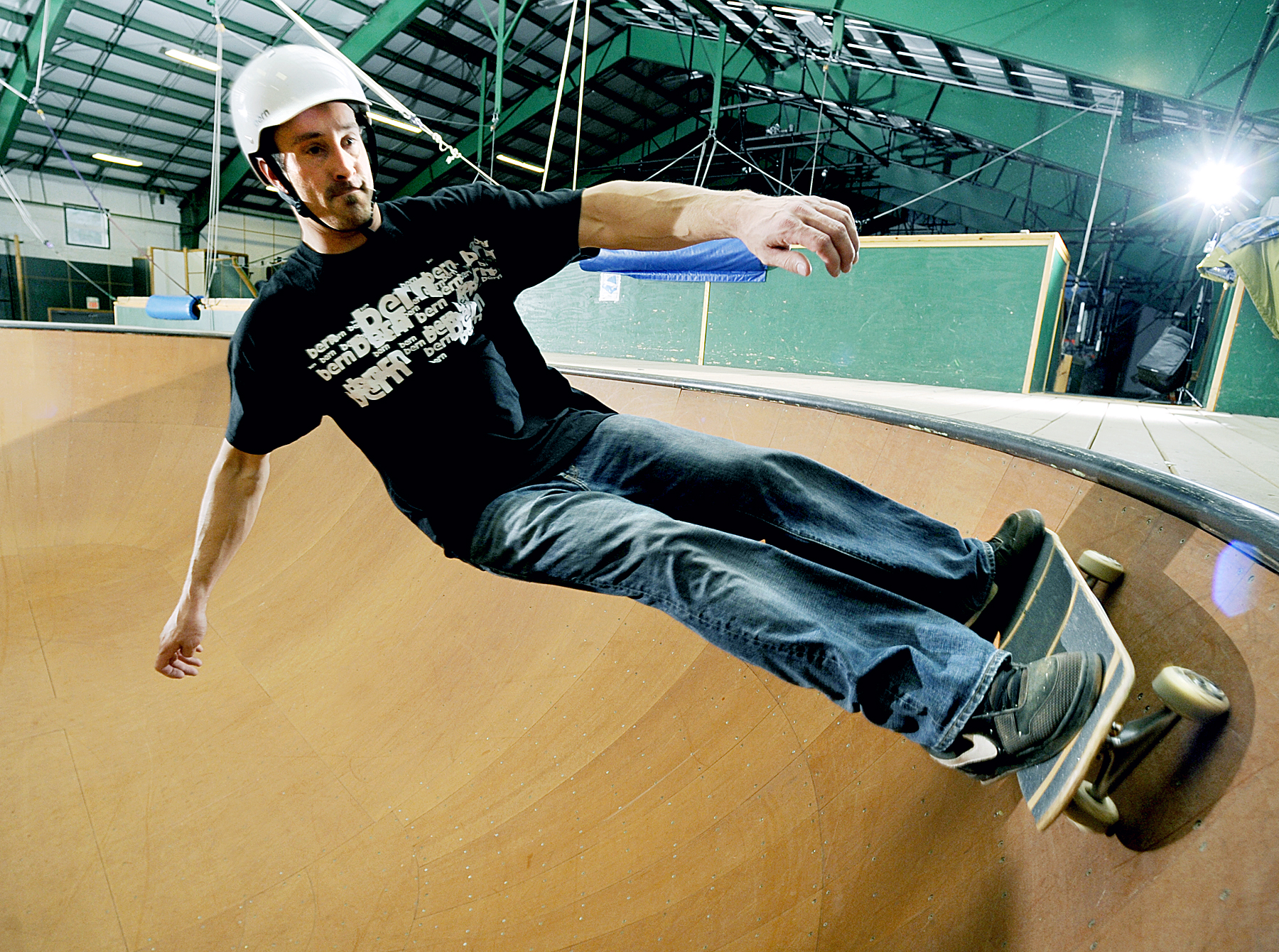
Seth Wescott rides the bowl while training at the Antigravity Recreation Complex skatepark in Carrabassett Valley on Thursday. Wescott said that the moves made on a skateboard are very similar to those on he makes on snowboardcross course. “It dials your balance in,” Wescott said of training on the skatepark. Wescott said he also gets about 40 days of surfing in a year along Maine’s coast. “All the board sports carry over,” said Wescott.
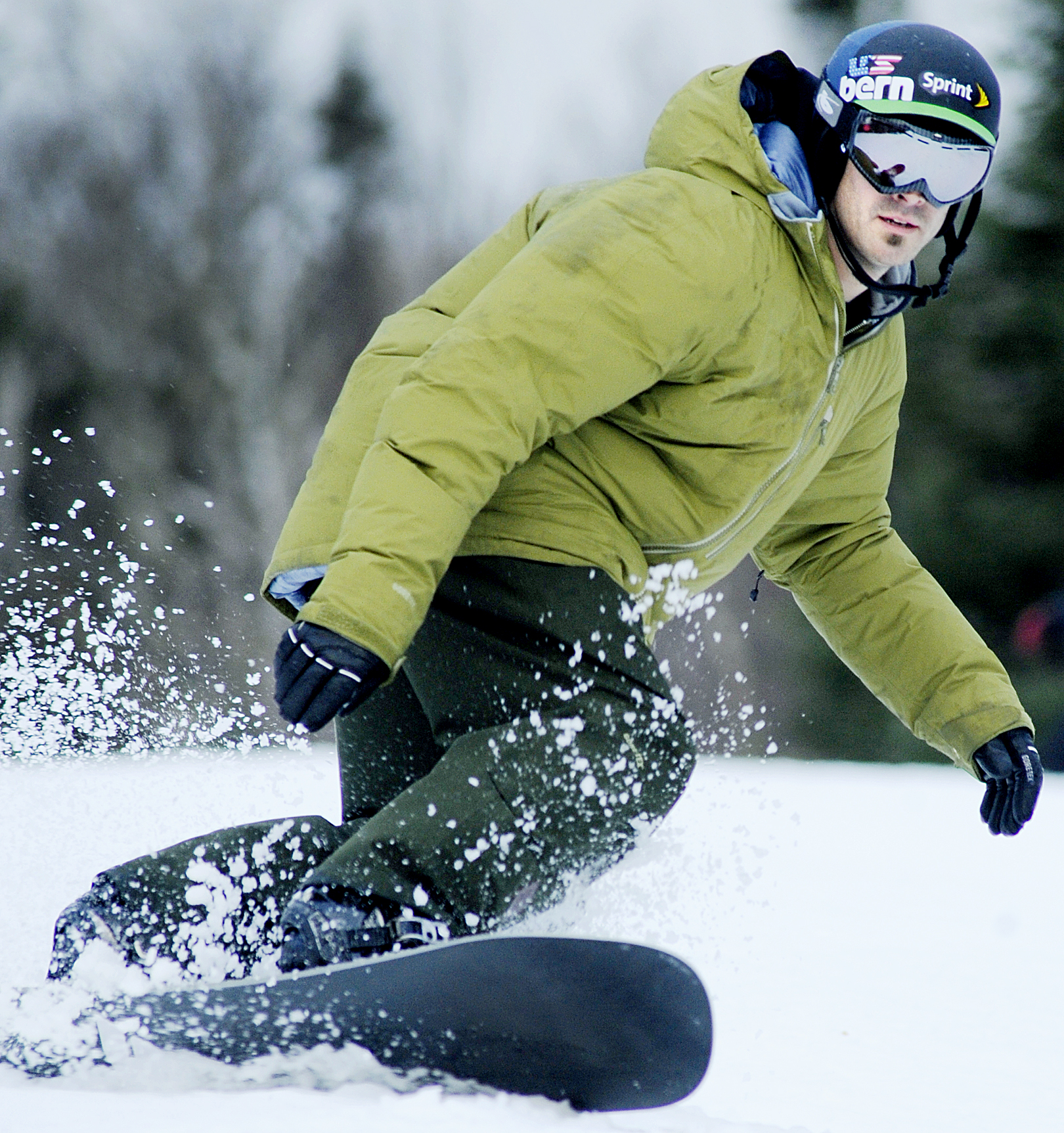
Seth Wescott snowboards down Tote Road at Sugarloaf on Thursday. Wescott leaves for Colorado on Monday for ten days of training camp in Telluride.
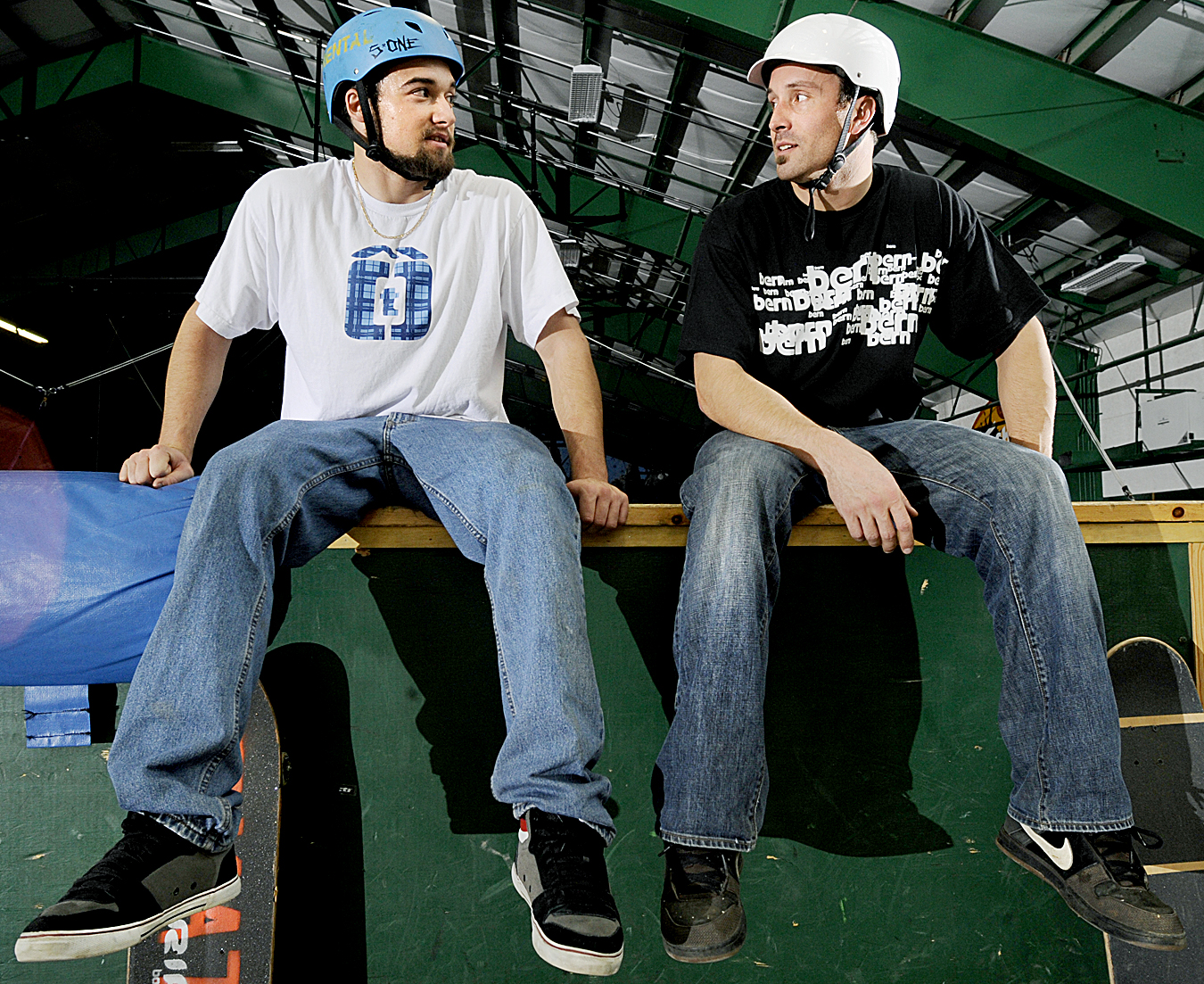
Alex Tuttle, left, and Seth Wescott take a break from skateboarding at the Antigravity Recreation Complex skatepark in Carrabassett Valley on Thursday. Tuttle of Stratton is making his snowboarding World Cup debut at Telluride, Colo.
Comments are no longer available on this story